Security Audits for Commercial & Multifamily Properties
Published: September 18, 2026·By the DoorSecurityGroup Installation & Review Team
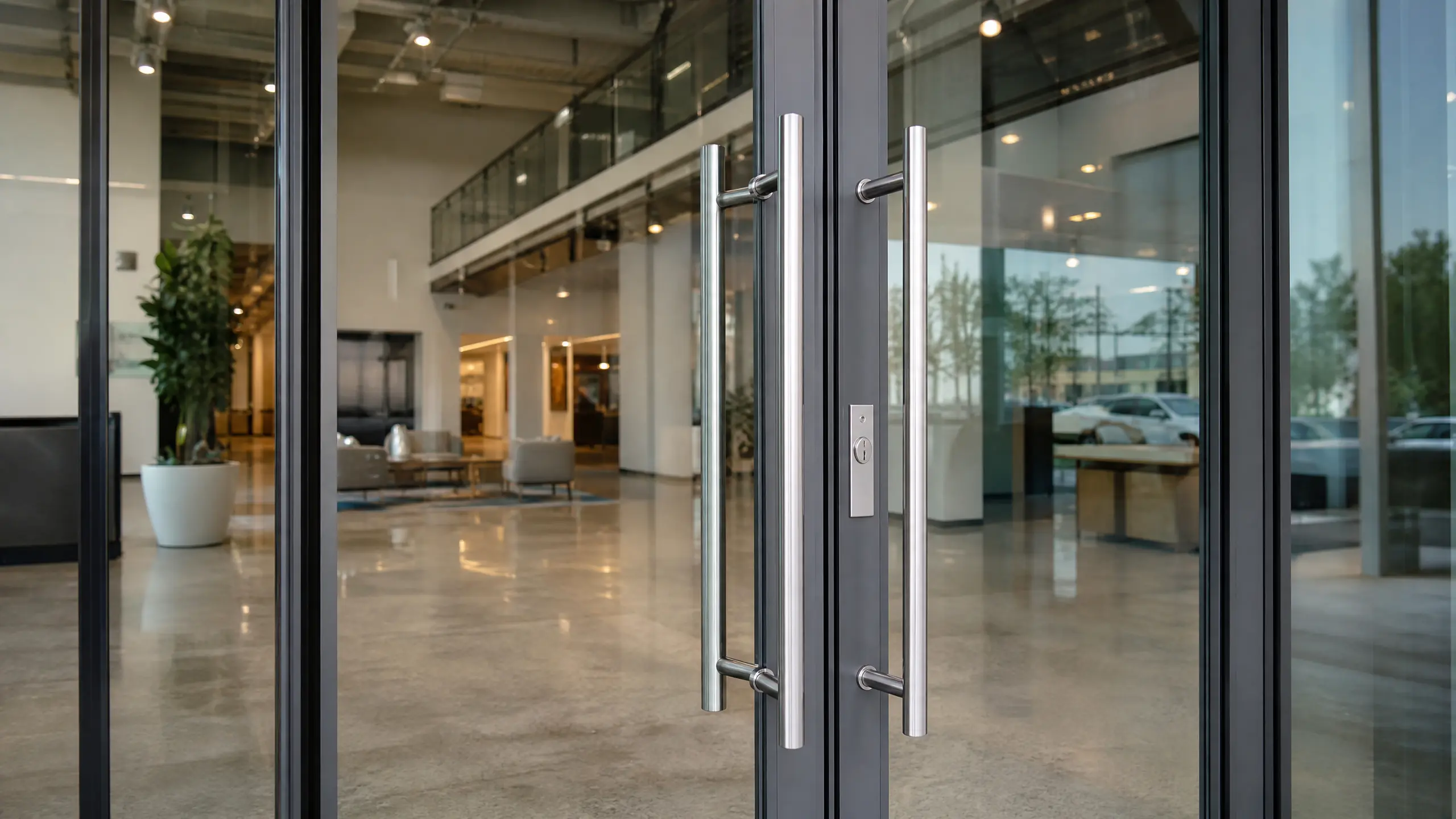
A commercial or multifamily security audit covers everything a residential audit does — doors, locks, frames — plus factors that don't exist in a single-family home: shared entry points, access control systems serving dozens or hundreds of users, fire code and egress compliance, and liability that extends to every tenant or employee in the building. Property managers and boards typically need a professional, on-site audit rather than a self-guided checklist for this reason.
What's Different About a Multifamily or Commercial Audit
Shared Entry Points Multiply the Risk
A single-family home has a handful of doors to secure. A multifamily building has a lobby, a lockbox or key drop, secondary entrances, laundry rooms, roof and basement access, and often a garage — every one of which is a potential entry point shared by everyone in the building. Our access control solutions and co-op & condo board security guide cover this in more depth.
Access Control Replaces Simple Locks
Where a house has a deadbolt, a commercial or multifamily building typically has a fob, keypad, or video intercom system serving many users at once. An audit needs to evaluate not just the hardware but the access list itself — are former tenants' or employees' credentials actually deactivated? Our master key systems guide and rekeying guidance cover the process side of this.
Compliance Is Part of the Audit, Not an Afterthought
Fire code and egress requirements directly constrain what security hardware is even legal to install on a shared building's doors — a mag-locked door that can't fail open in an emergency is a life-safety violation, not just a security choice. See our detailed NYC fire code & access control compliance guide for the specific rules that apply to New York City buildings, and confirm your local equivalent if you're elsewhere.
Liability Is Distributed Across the Property
A property manager or board has a duty of care to every resident or employee, which is a different standard than a homeowner securing their own property. This is often the strongest argument for a documented, professional audit rather than an informal walkthrough — you want a record of what was assessed and when.
What to Expect From a Commercial Audit
A proper commercial or multifamily audit typically includes:
- A walkthrough of every shared entry point, not just the main entrance.
- A review of the access control system's user list and credential history, not just the hardware.
- A compliance check against local fire and building code for any locking mechanism on an egress path.
- Documented findings and prioritized recommendations you can bring to a board vote or a capital improvement budget.
Getting Started
If you manage a co-op, condo, hospitality property, or retail space, see our industry-specific guides for property management, co-op & condo boards, hospitality, and retail security. Our free AI Security Assessment can serve as a useful starting point for a single unit or entry point, but for a full building audit, contact our team directly — our nationwide partner network handles commercial and multifamily assessments and installations.
Related Security Guides
What Our AI Security Assessment Actually Checks
A transparent look at what our free AI Security Assessment analyzes, how it generates recommendations, and its limitations compared to an in-person audit.
Case Study: Diagnosing a String of Failed Door Operator Inspections at a Brooklyn Shelter
A Brooklyn supportive housing project kept failing city inspection on its automatic door operators even after two rounds of brand-new replacement parts. Here's what was actually wrong, and how we found it.
Best Driveway & Perimeter Alarms of 2026
The best driveway and perimeter motion alarms of 2026 — early-warning systems that alert you before someone reaches your door.