What Our AI Security Assessment Actually Checks
Published: September 18, 2026·By the DoorSecurityGroup Installation & Review Team
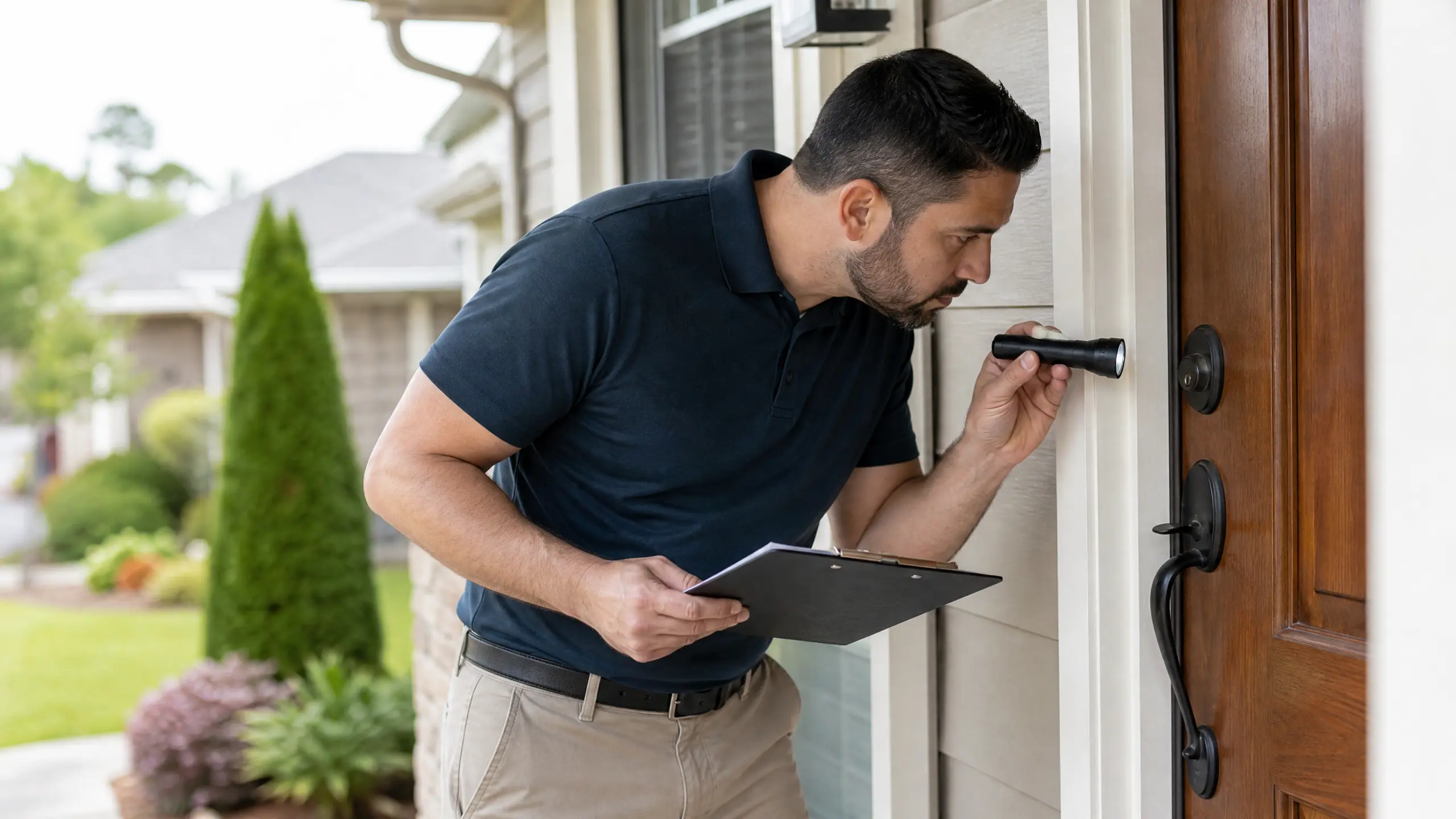
Our AI Security Assessment analyzes photos and answers you provide about your property's entry points — door material, lock type, frame condition, and surrounding hardware — and compares them against the same criteria our team uses in manual audits: ANSI/BHMA lock grading, frame reinforcement, and known weak points for the specific door and lock configuration you have. It then returns a prioritized list of findings, not a generic score.
What Goes Into the Assessment
When you work through the assessment, it evaluates:
- Door and frame material — solid-core, hollow-core, wood, steel, or fiberglass, since each has different failure modes under force.
- Lock hardware present — deadbolt type and, where visible, its ANSI grading (see our deadbolt grades guide for what these ratings actually mean).
- Strike plate and hinge condition — the most common weak point behind an otherwise strong lock.
- Secondary entry points you tell it about — windows, sliding doors, and secondary doors, since a strong front door doesn't help if a side window is unsecured.
- Property type and context — a Manhattan apartment door has different realistic threats than a suburban house with a driveway and yard, and the assessment adjusts its recommendations accordingly.
What It Does Not Replace
We built the assessment to be genuinely useful, not to oversell itself. It has real limits:
- It can't physically test whether a lock mechanism is worn or a frame has hidden rot the way an in-person inspection can.
- It works from what's visible in your photos and answers — it won't catch a problem you didn't photograph.
- For a commercial or multifamily property with fire code and egress requirements layered on top of physical security, it's a starting point, not a substitute for the code review covered in our commercial audit guide and our NYC fire code & access control compliance guide.
Why We Built It This Way
Most "security score" tools online generate a generic percentage with no actionable detail behind it. We built ours the opposite way: every recommendation ties back to a specific, named issue (a lock grade, a strike plate, a frame material) so you know exactly what you're being told to fix and why — the same standard described in our review process. If a finding calls for professional judgment, it says so, and our nationwide partner network is available for a hands-on follow-up.
Try It
The assessment takes a few minutes and is free — start your Security Assessment now. If you'd rather understand the tradeoffs between a self-guided checklist and a full professional visit first, see our DIY vs. professional audit guide.
Related Security Guides
Case Study: Diagnosing a String of Failed Door Operator Inspections at a Brooklyn Shelter
A Brooklyn supportive housing project kept failing city inspection on its automatic door operators even after two rounds of brand-new replacement parts. Here's what was actually wrong, and how we found it.
Best Driveway & Perimeter Alarms of 2026
The best driveway and perimeter motion alarms of 2026 — early-warning systems that alert you before someone reaches your door.
Best Security Cameras for Apartments
The best security cameras for apartments and rentals in 2026 — wireless, no-drill, and lease-friendly options that don't require permanent installation.