Deadbolt Grades: ANSI/BHMA Explained
Published: July 26, 2026·By the DoorSecurityGroup Installation & Review Team
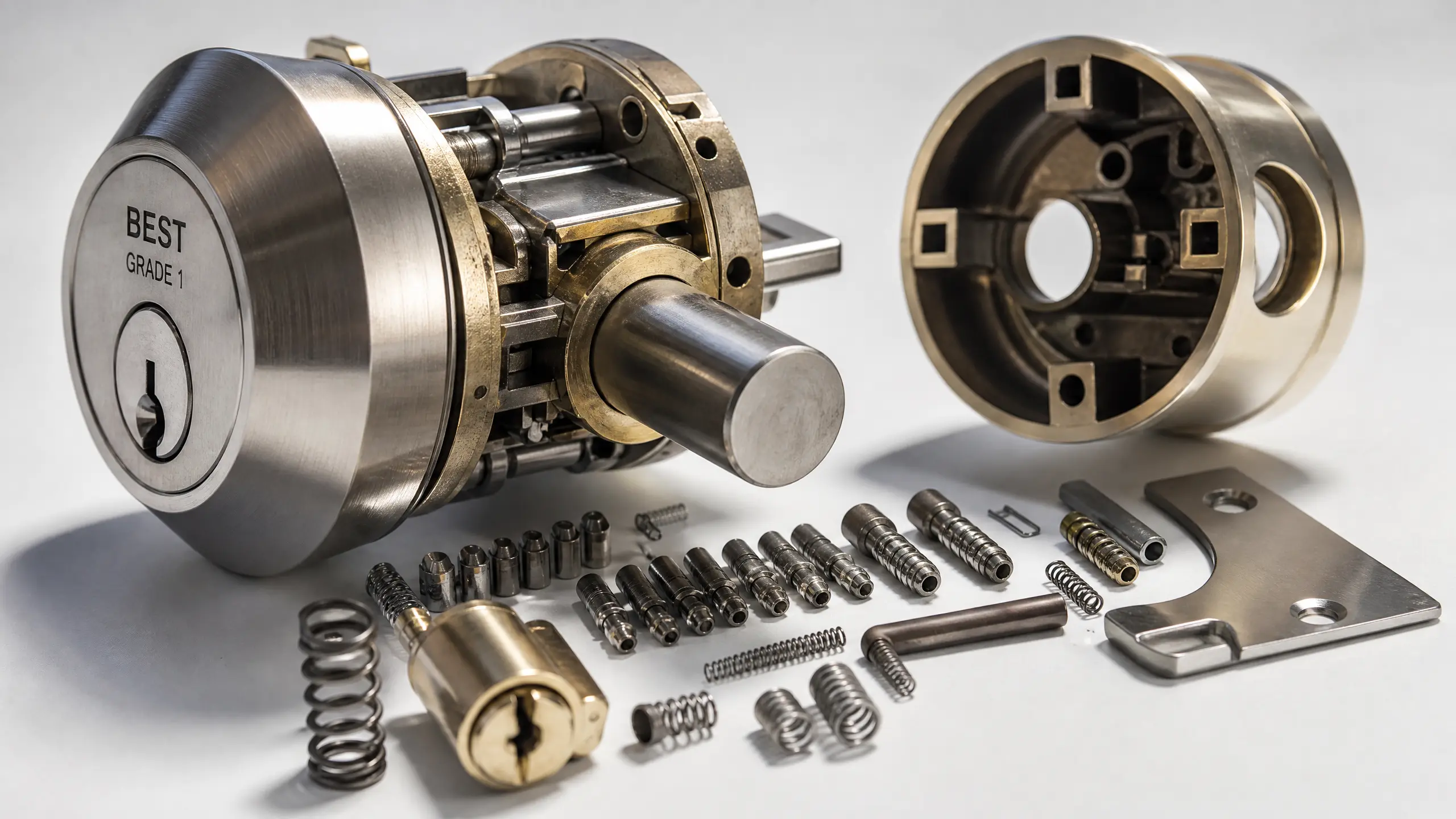
When it comes to securing your home or business, the quality of your deadbolt is paramount. But with so many options on the market, how do you know which one actually offers robust protection? The answer lies in the ANSI/BHMA grading system.
What is ANSI/BHMA?
The American National Standards Institute (ANSI) and the Builders Hardware Manufacturers Association (BHMA) have established a rigorous set of standards for door hardware. These standards test locks for operational performance, security, and finish.
The Three Grades
Locks are tested and assigned one of three grades based on their performance:
Grade 1: The Highest Security
- Best For: Commercial applications and maximum residential security.
- Testing criteria: Withstands 1 million cycles, 10 hammer blows, and a 250-pound weight test.
- Why choose it?: If you want the absolute best protection against forced entry, kick-ins, and lock bumping/picking.
Grade 2: Standard Residential Security
- Best For: General residential use (front doors, back doors).
- Testing criteria: Withstands 400,000 cycles, 5 hammer blows, and a 150-pound weight test.
- Why choose it?: It offers a solid balance of security and affordability for most homes.
Grade 3: Basic Security
- Best For: Secondary doors or interior doors.
- Testing criteria: Withstands 200,000 cycles and 2 hammer blows.
- Why choose it?: Only recommended where high security isn't the primary concern.
Recommendation
For your primary exterior doors, always aim for a Grade 1 deadbolt if your budget allows. It's the most effective single upgrade you can make to stop unauthorized entry.
If you're unsure what grade your current lock is, try our free AI Security Assessment to get an expert analysis of your setup.
Related Security Guides
What Our AI Security Assessment Actually Checks
A transparent look at what our free AI Security Assessment analyzes, how it generates recommendations, and its limitations compared to an in-person audit.
Case Study: Diagnosing a String of Failed Door Operator Inspections at a Brooklyn Shelter
A Brooklyn supportive housing project kept failing city inspection on its automatic door operators even after two rounds of brand-new replacement parts. Here's what was actually wrong, and how we found it.
Best Driveway & Perimeter Alarms of 2026
The best driveway and perimeter motion alarms of 2026 — early-warning systems that alert you before someone reaches your door.