Security Solutions for Retail Stores & Storefronts
Storefront hardening, access control, and camera systems for retail locations, covering both after-hours break-ins and in-store loss prevention.
Retail security splits into two different problems that get solved with two different toolkits: keeping the store from being broken into when it's closed, and controlling loss and access while it's open. A storefront that's hardened against forced entry can still bleed inventory through unmonitored back doors and unmanaged staff access during business hours, and a store with excellent in-store loss prevention can still lose everything to a smash-and-grab if the storefront itself is soft.
After-Hours: Hardening the Storefront
Retail storefronts, especially street-level locations, are frequent break-in targets precisely because they're visible, predictable, and often less reinforced than the merchandise inside deserves. The fundamentals from our door reinforcement guide apply directly here — reinforced strike plates, secured hinges, and a solid door and frame — but retail storefronts have an additional consideration most residential doors don't: glass. Storefront glass doors and windows are frequently the actual point of entry, not the lock itself, which is why we typically recommend commercial-grade security film or impact-resistant glazing alongside standard lock hardening for street-facing retail.
If your storefront has been broken into or its glass has been damaged, our emergency repair service includes emergency board-up (including heavy-duty polycarbonate boarding that lets light in while resisting blunt-force impact) so the store isn't left exposed overnight, followed by permanent hardware and glass repair.
Commercial-Grade Locking Hardware for High-Traffic Doors
A retail entrance sees far more daily open-close cycles than a typical office or residential door, which means standard residential-grade hardware wears out and fails faster than the store's traffic can tolerate. Commercial panic hardware and heavy-duty deadbolts and mortise locks are built for that duty cycle — see our deadbolt grades guide for how ANSI/BHMA grading maps to real-world durability, and our panic bars guide if your occupancy load requires panic hardware on the exit (most retail spaces above a certain size do).
In-Store Loss Prevention: Access Control Beyond the Front Door
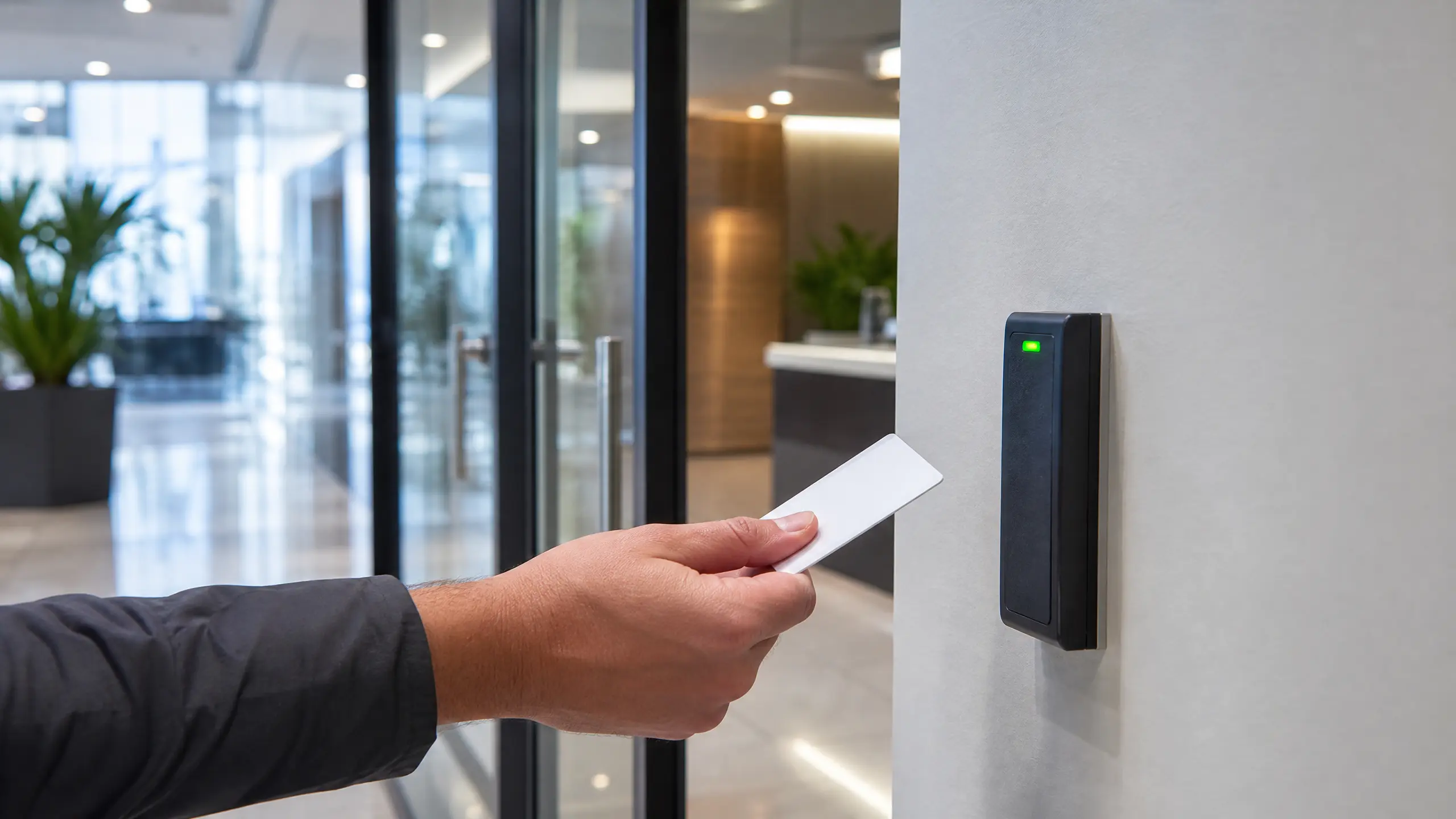
The doors that actually need controlling in a retail environment are often not the customer entrance at all — it's the stockroom, the office, the safe room, and the back/loading entrance where employee theft and unauthorized after-hours access are the real exposure. A commercial access control system lets you restrict stockroom and office access to specific staff, log exactly who entered sensitive areas and when, and instantly revoke a terminated employee's credentials rather than relying on a rekey that might not happen for weeks.
Camera Coverage That Actually Supports a Claim or an Investigation
Security cameras at retail locations serve two different purposes that are worth planning for separately: visible deterrence at customer-facing entrances and registers, and evidentiary-quality coverage at the points that matter for loss prevention investigations — the stockroom door, the safe, and the loading dock. A camera system installed only for visible deterrence often turns out to have the wrong angle or resolution when footage is actually needed for a police report or an insurance claim; we plan coverage around both goals from the start rather than treating cameras as an afterthought bolted onto the alarm system.
Delayed Egress and Loss Prevention: What's Actually Legal
Some retail operators want to slow down an exit near high-value merchandise for loss-prevention reasons. This is possible under NYC code through a properly engineered delayed-egress locking system, but it comes with real restrictions — the building generally must be fully sprinklered and alarmed, the delay is capped at a short interval, and the door must release immediately on a fire alarm signal. This is not a DIY wiring project; we cover the specifics in our NYC Fire Code & Access Control Compliance Guide, and it's worth a compliance review before installing anything that intentionally slows down an exit.
Multi-Location Retail: Standardizing Across Stores
For retail operators with more than one location, the same standardization logic we cover in our property management security guidance applies directly: one keying and access control standard across every store location means a district manager or loss-prevention team can apply one playbook everywhere, instead of relearning each store's setup during an incident.
Get Your Storefront Assessed
Whether you're hardening a single storefront after an incident or standardizing security across a multi-location retail footprint, request a quote or contact our team to start with a walk-through of your specific location.
Related Security Reviews
Best Apple HomeKit Smart Locks (2026 Guide)
Our 2026 guide to the best Apple HomeKit smart locks, featuring Apple Home Key integration, Thread and Matter support, and Siri compatibility.
Best Doorbell Cameras (2026 Guide)
Our Manhattan security team's rankings of the best doorbell cameras, comparing the Google Nest Doorbell, Ring Video Doorbell Pro 2, and Wyze Video Doorbell v2.
Best Fingerprint Door Locks (2026 Guide)
Our Manhattan security team tests and ranks the best fingerprint door locks for 2026. Compare biometric performance, pricing, and installation notes before you buy.
Get a Professional Security Assessment
Based in Manhattan, our security experts serve homeowners and businesses nationwide. Use our free AI tool to pinpoint your exact vulnerabilities.