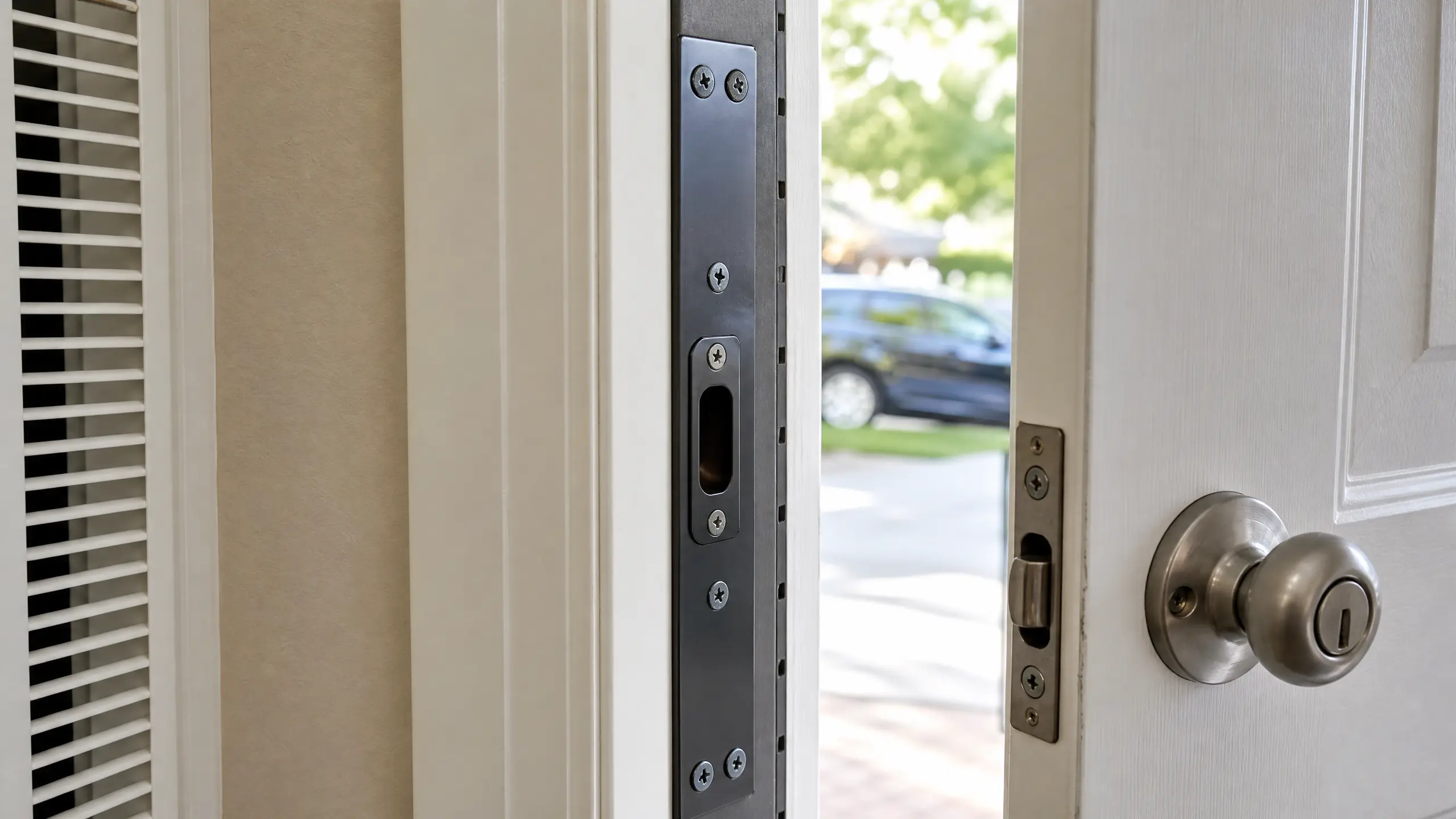
Door Reinforcement: Strengthen Your Door, Jamb & Frame
A strong deadbolt is only one part of a secure entry. Reinforcing a front door means checking the strike plate, jamb, frame, hinges, door material, and how each part is fastened. Door Security Group is based in Manhattan and can discuss residential and commercial door hardware through its service network.
Why Do High-Quality Locks Fail During a Break-In?
The short answer: The wood door frame splinters before the deadbolt breaks. Standard residential and commercial door frames are often installed with half-inch screws that barely penetrate the stud framing. When brute force is applied (like a kick), the weak pine trim splits, allowing the door to swing open even if the lock remains fully engaged.
To solve this, Door Security Group implements a layered hardware reinforcement strategy that anchors the hardware directly into the structural studs of the building.
The Weak Point
A short fastener may not reach the wall framing. The right repair depends on the jamb, rough opening, door, and existing hardware.
The Application
We install specialized steel plates and extended hardware to distribute force across the structural wall.
The Result
Reinforcement can improve how hardware transfers force to the frame, but no hardware upgrade can guarantee that a door will resist every forced-entry attempt.
Comprehensive Door Fortification
High-Security Strike Plates & Fasteners
The strike plate is the metal plate on the frame that catches the deadbolt. Standard plates may use short screws that engage only the jamb. A compatible extended strike or reinforcement plate can provide a stronger attachment when it suits the door assembly and is properly installed.
- Appropriately sized fasteners: Longer screws may help connect hardware to structural framing, but length and placement must suit the jamb, wall construction, and any rated opening. Avoid drilling where wiring, plumbing, or other services may be present.
- Force Distribution: Elongated plates spread the impact force over a larger area, preventing the wood from splitting at a single stress point.
Door Wrap-Around Plates
Wooden doors are vulnerable around the lock bore holes. Intruders may attempt to split the door itself rather than the frame. A wrap-around plate (or door sleeve) solves this by encasing the lock hardware.
- Solid Metal Sheath: Wraps a solid piece of stainless steel or brass around the edge of the door, completely encasing the lock area.
- Repairing Damage: Excellent for salvaging a door that has already sustained kick-in damage or splitting.
Security Hinge Pins & Upgrades
If an intruder cannot break the lock side, they will attack the hinge side. Outward-swinging doors are particularly vulnerable because the hinge pins are exposed to the outside.
- Security Hinge Pins (Corrugated Pins): Prevents a door from being lifted out of the frame even if the hinge pins are removed by a burglar.
- Hinge fasteners: Use fasteners compatible with the hinge, jamb, and framing. Longer screws may be appropriate in some openings, but confirm fit and avoid hidden utilities.
Detailed Product Comparison
Not all door reinforcements are created equal. Here is how standard options compare to commercial-grade plates and complete frame fortification kits.
Basic Strike Plates
Standard
The builder-grade strike plate that comes with most locks. It provides basic latch functionality but minimal structural security against brute force.
- Often shorter than a reinforced strike plate
- May use fasteners that engage only the jamb
- Performance depends on the complete door assembly
Don-Jo Wrap-Around Plates
Commercial Grade
Ideal for strengthening the door itself. A stainless steel or brass plate wraps around the door edge to encase the lock, preventing the door material from splitting.
- Solid metal construction
- Great for repairing damaged doors
- Strengthens the lock mounting point
Door Armor MAX
Ultimate Protection
This multi-part kit is designed to reinforce the strike side, door edge, and hinge area of compatible openings. Check the manufacturer's specifications and confirm fit before installation.
- 46-inch heavy-duty steel jamb shield
- Hinge shields & door edge shields
- Reinforces multiple areas of a compatible door opening
How to Reinforce a Front Door and Door Jamb
Start with the complete opening, not just the lock. Check the door material and condition, the gap and alignment, the strike-side jamb, hinge attachment, and whether the opening has a fire or accessibility rating that must be preserved.
- Inspect the frame and jamb. Look for cracks, loose trim, soft or split wood, and movement around the strike. Repair damaged framing before adding new hardware.
- Reinforce the strike area. A compatible extended strike or jamb-reinforcement plate can distribute attachment across a larger area. Select fasteners for the actual wall and frame construction; longer is not automatically safer or suitable.
- Secure the hinge side. Check screw engagement and, on outward-swinging doors, use hinges or security studs designed for that door. Keep the door correctly aligned so it latches without binding.
- Match the solution to the door. A wrap-around plate may suit a compatible wood door; frame reinforcement addresses a different weakness. Fiberglass, steel, and fire-rated assemblies need hardware and methods appropriate to their construction.
For a broader do-it-yourself checklist, see 10 ways to reinforce your front door. For a professional scope, review our door reinforcement service options or contact the team.
People Also Ask (FAQ)
Real answers to common concerns about door security and reinforcement.
Does door reinforcement actually stop a kick-in?
Reinforcement can improve how hardware transfers force to the frame, but the outcome depends on the door, frame, fasteners, and installation. No upgrade makes a door impossible to breach.
Can I install reinforcement on a fiberglass door?
It may be possible, but first identify the door construction and frame condition. Reinforcement hardware must be compatible with the specific fiberglass door and its frame; follow the manufacturer's instructions or consult a qualified installer.
How much does it cost to reinforce a door?
Price depends on the door and frame condition, hardware selected, labor, and whether repairs or code-compliant replacement parts are needed. Ask for an itemized quote based on the actual opening rather than relying on a one-size-fits-all online estimate.
Don't Wait Until After a Break-In
Protect your property proactively. Our nationwide network of licensed security technicians based out of Manhattan is ready to fortify your doors.
Request a Security Audit