What Is a Security Audit? How a Home Security Assessment Works
Published: September 18, 2026·By the DoorSecurityGroup Installation & Review Team
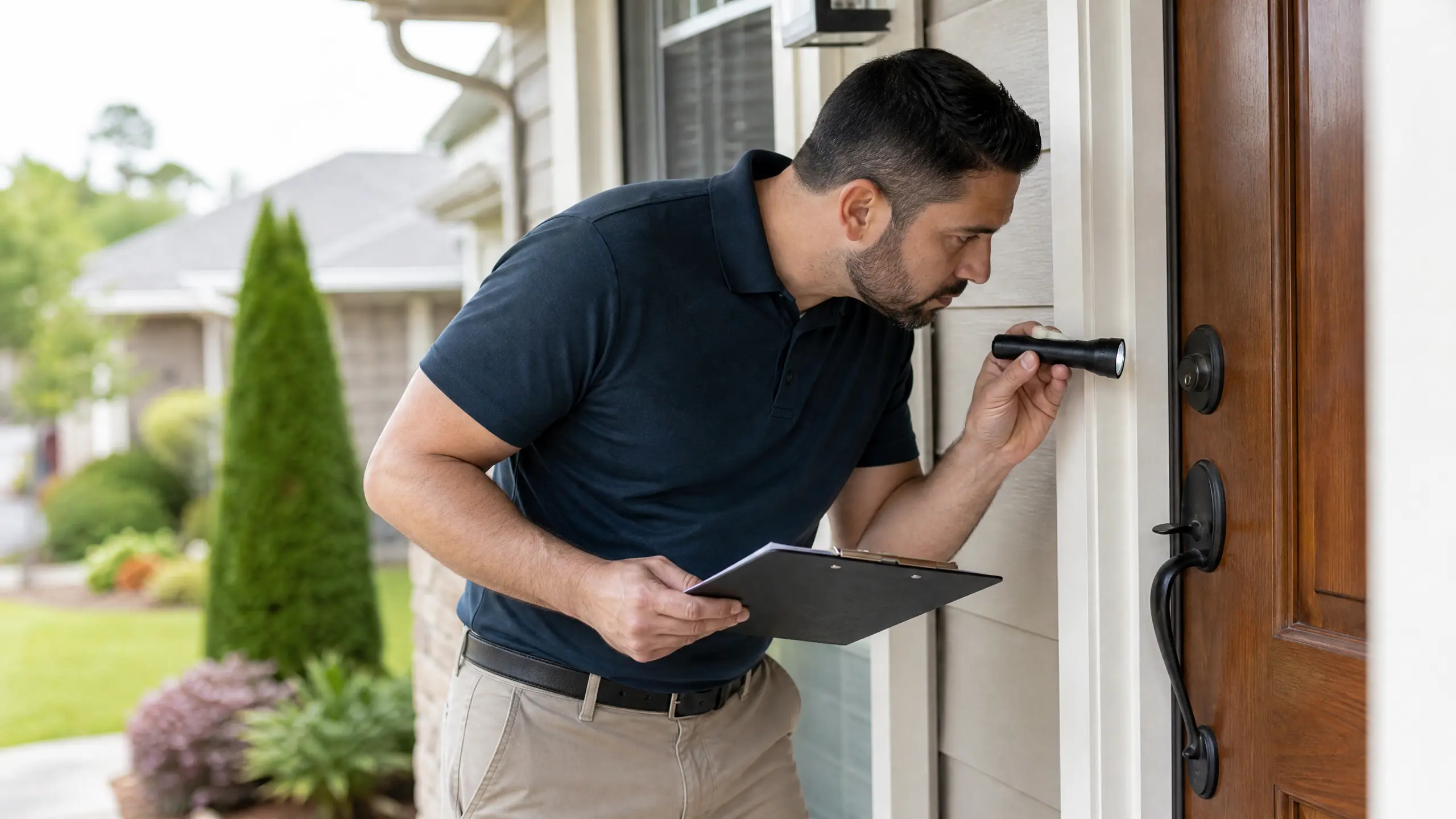
A security audit is a systematic walkthrough of a property's entry points — doors, windows, locks, lighting, and access control — to identify specific weaknesses before an intruder does. A good audit doesn't just say "your home is at risk"; it names the exact door, lock, or gap that needs attention and what to do about it. Our own free AI Security Assessment is built to do exactly this for your property in a few minutes.
What a Security Audit Actually Covers
A thorough audit walks through every point where someone could enter the property, not just the front door. At minimum, that means:
- Every exterior door — material, hinge exposure, deadbolt grade, and strike plate condition. See our deadbolt grades guide for how locks are actually rated.
- Door frames and jambs — a Grade 1 deadbolt installed in a weak, unreinforced frame still fails under a kick-in attempt. Door reinforcement is often the highest-value, lowest-cost fix an audit turns up.
- Windows and sliding doors — secondary points of entry that are frequently left with only the factory latch.
- Lighting and visibility — poorly lit entry points give an intruder time and cover.
- Access control, where applicable — for multifamily buildings, this extends to lobby doors, fire exits, and shared entry points (see our commercial and multifamily audit guide).
Why "Just Buy a Better Lock" Isn't an Audit
A common mistake is treating security as a single-product decision — swap in a smart lock, add a camera, done. An actual audit looks at the whole system: a $300 smart deadbolt mounted in a door with a hollow-core frame and no strike plate reinforcement provides a false sense of security. The audit's job is to find the weakest link, not just the most visible one.
What You Get From a Good Audit
A useful audit report should give you three things for each issue it finds:
- What's wrong — specific and observable, not generic ("the strike plate uses 3/4-inch screws that don't reach the framing" rather than "your door could be more secure").
- Why it matters — the actual failure mode it enables (kick-in, prying, lock bypass).
- What to do about it — a concrete next step, whether that's a $10 hardware fix or a professional installation.
Getting Your Own Audit
You have two practical paths: a walkthrough checklist you complete yourself (see our DIY vs. professional audit guide for how to decide which fits your situation), or our free AI Security Assessment, which analyzes photos of your entry points and returns specific, prioritized recommendations in minutes. For commercial or multifamily properties with compliance requirements layered on top of physical security, see our dedicated guide.
If you'd rather talk through your specific property with a person, contact our team — our nationwide partner network can also handle a full in-person audit and installation.
Related Security Guides
What Our AI Security Assessment Actually Checks
A transparent look at what our free AI Security Assessment analyzes, how it generates recommendations, and its limitations compared to an in-person audit.
Case Study: Diagnosing a String of Failed Door Operator Inspections at a Brooklyn Shelter
A Brooklyn supportive housing project kept failing city inspection on its automatic door operators even after two rounds of brand-new replacement parts. Here's what was actually wrong, and how we found it.
Best Driveway & Perimeter Alarms of 2026
The best driveway and perimeter motion alarms of 2026 — early-warning systems that alert you before someone reaches your door.