Fire Doors: Life Safety Infrastructure
Published: July 26, 2026·By the DoorSecurityGroup Installation & Review Team
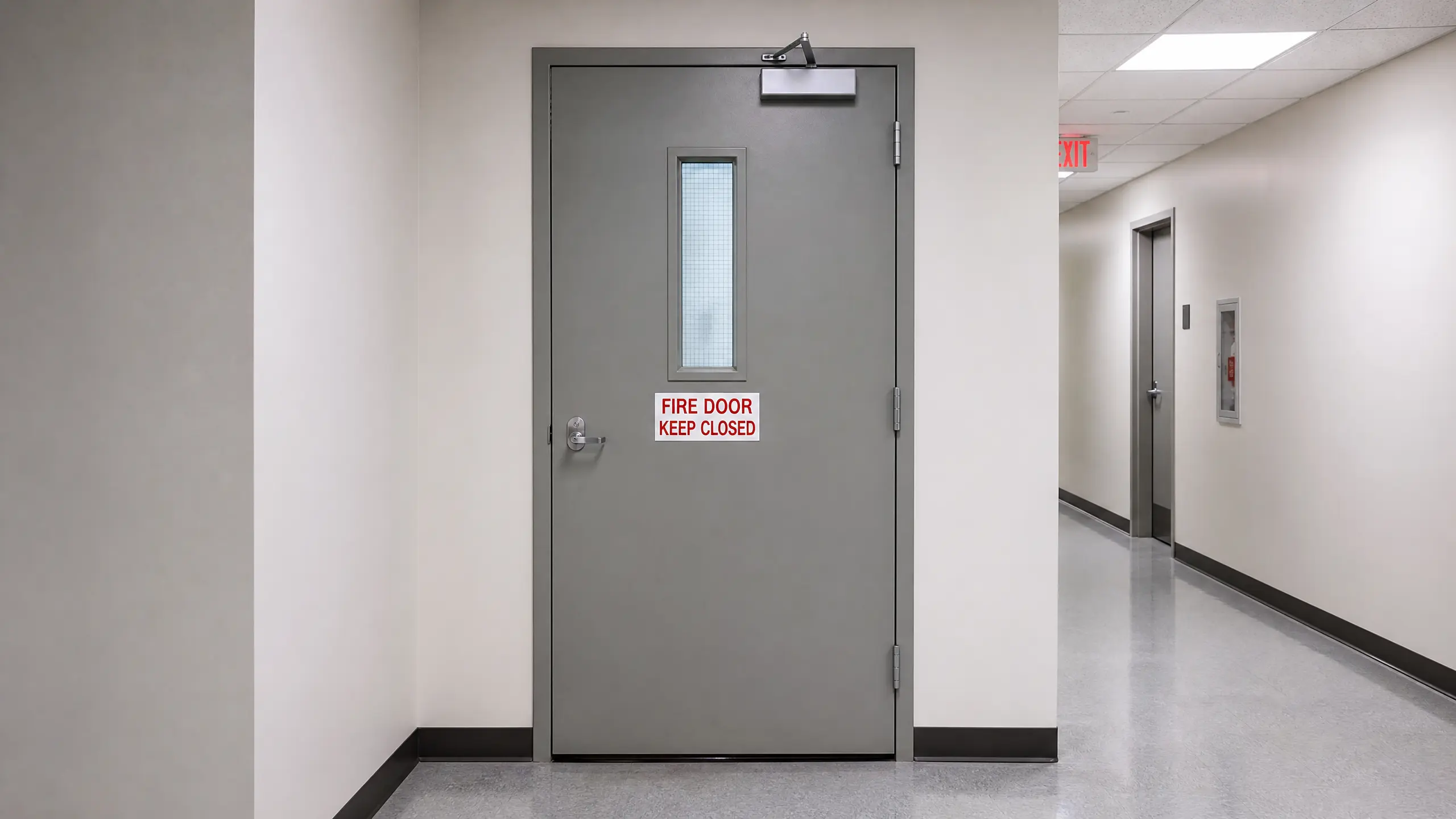
Understanding Fire Doors: Critical Life Safety
A fire door is a specialized, fire-resistance-rated door assembly designed to prevent the spread of fire and smoke between compartments within a building. To function correctly, it must be kept closed, have proper latching hardware, and undergo annual inspections.
What Makes a Door a "Fire Door"?
A fire door is not just a heavy door. It is a complete assembly tested and certified as a single unit. This assembly includes the door leaf, the frame, the hinges, the locks, and the closing device. If any component is incorrect or fails, the entire door loses its fire rating.
Fire Ratings Explained
Fire doors are rated by how long they can withstand fire exposure, typically measured in minutes or hours.
- Actionable Advice: Ensure the rating of the door matches the requirement for the wall it's installed in. Common ratings are 20, 45, 60, 90, and 180 minutes. The label detailing the rating must be visible on the hinge edge of the door. Never paint over or remove this label.
Essential Components of a Fire Door Assembly
1. Self-Closing Mechanism
A fire door is useless if it's open during a fire.
- Actionable Advice: Every fire door must have an active closing device (door closer or spring hinges) that ensures the door swings fully closed after every use. Never prop open a fire door with wedges or stops.
2. Positive Latching
The door must latch securely when closed to withstand the pressure changes caused by a fire.
- Actionable Advice: Ensure the latch mechanism engages fully and automatically every time the door closes.
3. Approved Hardware
All hardware on a fire door must be listed and labeled for fire door use.
- Actionable Advice: Do not install non-rated deadbolts, viewers, or kick plates on a fire door, as this voids its certification.
4. Intumescent Seals
Many fire doors (especially wood doors) use intumescent seals around the edges. These expand rapidly when exposed to heat, sealing the gap between the door and frame to stop smoke and flames.
Annual Inspections
NFPA 80 (Standard for Fire Doors and Other Opening Protectives) requires that fire door assemblies be inspected and tested at least annually by a qualified person.
- Actionable Advice: Implement a strict maintenance schedule. Check for proper closing, latching, clearance gaps, and any physical damage to the door or frame.
Conclusion
Fire doors are a crucial passive fire protection system. By respecting their purpose, ensuring proper components are used, and maintaining them diligently, you protect both lives and property.
Related Security Guides
What Our AI Security Assessment Actually Checks
A transparent look at what our free AI Security Assessment analyzes, how it generates recommendations, and its limitations compared to an in-person audit.
Case Study: Diagnosing a String of Failed Door Operator Inspections at a Brooklyn Shelter
A Brooklyn supportive housing project kept failing city inspection on its automatic door operators even after two rounds of brand-new replacement parts. Here's what was actually wrong, and how we found it.
Best Driveway & Perimeter Alarms of 2026
The best driveway and perimeter motion alarms of 2026 — early-warning systems that alert you before someone reaches your door.