Portable Travel Door Locks: Types, Fit, and How to Choose
Compare portable hotel door locks, travel alarms, and security bars. Learn what fits your door, what each device can and cannot do, and what to check before using one.
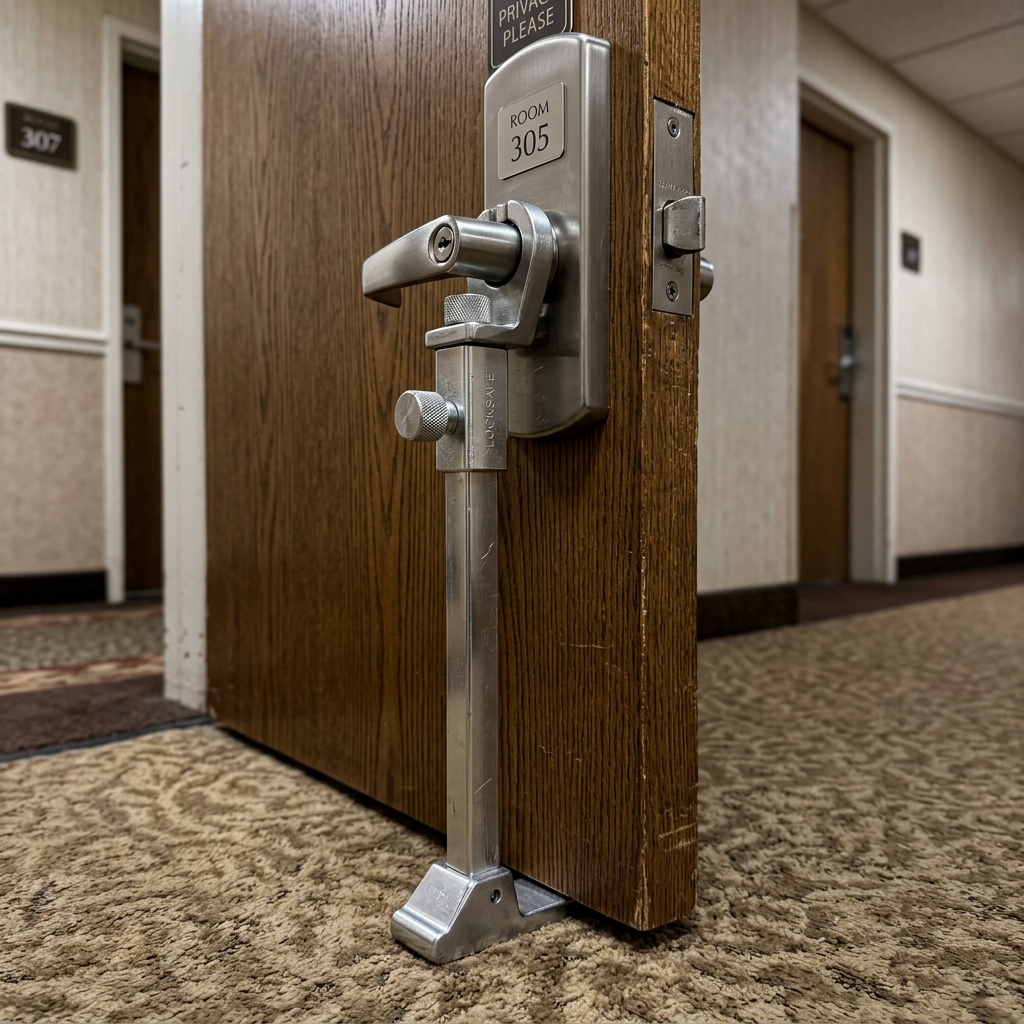
A portable travel door lock can add a physical obstruction or an audible alert while you are inside a hotel, hostel, or rental. It is an optional extra, not a replacement for the room's installed lock and not a guarantee against entry. Whether it works depends on the door, frame, floor, and the particular device.
There is no responsible way to call a product “best” without current, comparable testing and verified model details. Instead, this guide explains the main device types, the fit checks that matter, and the tradeoffs to consider before packing one.
Portable door-lock types at a glance
Removable latch-style locks
These devices fit into or around the strike-plate area and are held in place when the door closes. For example, the Addalock manufacturer describes its product as intended for hinged doors that open inward. That limitation matters: a device designed for an inward-swinging door should not be assumed to fit an outward-swinging door or every strike plate. Check the exact model's instructions and test the fit before relying on it. Addalock product information
A correctly fitted physical blocker may make a door harder to open from outside, but performance depends on the door and installation. Do not treat claims that any portable lock “defeats master keys” or stops forced entry as universal facts.
Door wedges and wedge alarms
A plain wedge uses friction against the floor; an alarm-equipped wedge adds a sound if the door presses against it. These are quick to position, but a wedge can slide or fail to hold depending on the door's clearance, floor finish, carpet pile, and approach angle. An alarm may attract attention, but it does not physically secure the door by itself.
Handle or vibration alarms
A compact alarm may sound when a handle moves or the device detects vibration. It can be an alternative when a physical blocker does not fit, but it is a notification rather than a barrier. Check how it senses movement, how it is armed, and whether it needs batteries. Avoid assuming an alarm will trigger for every way a door might be opened.
Security bars and door jammers
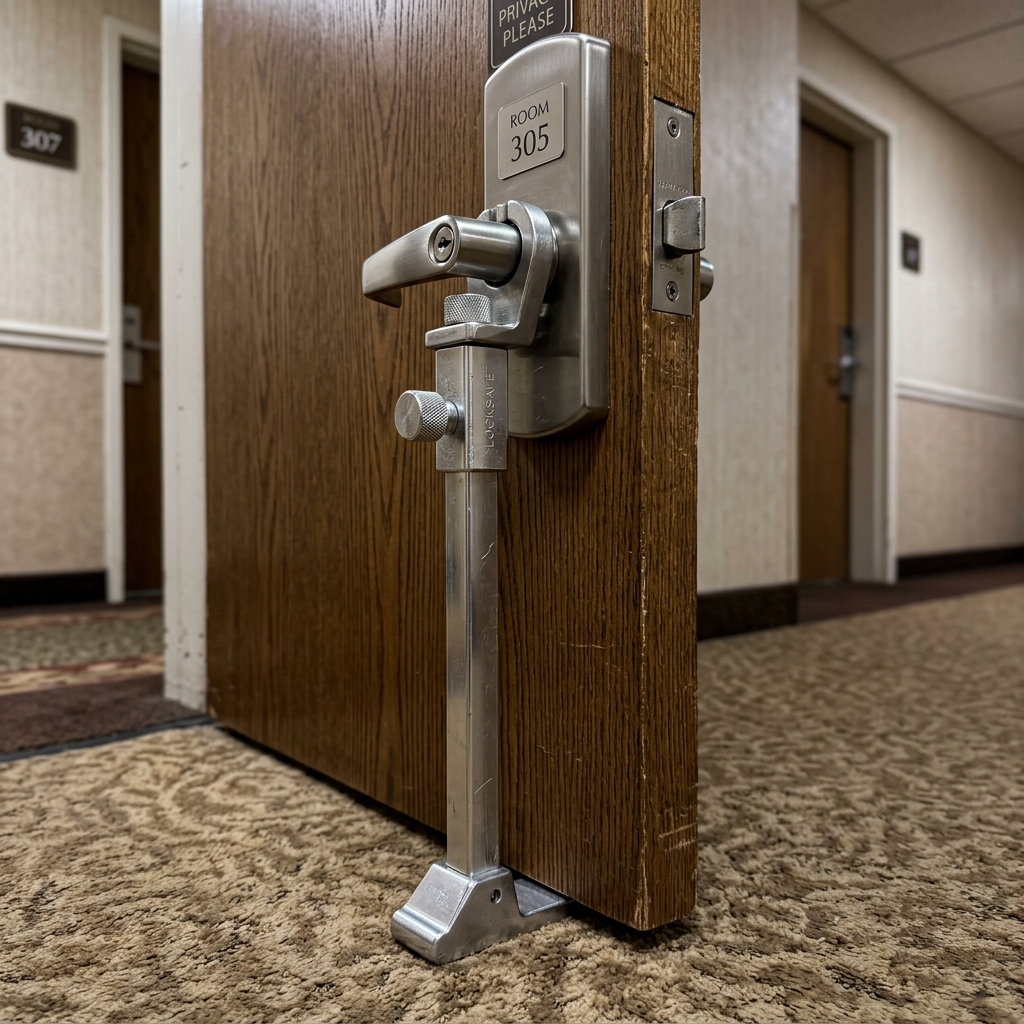
A bar or jammer braces between the floor and a door or handle. These can be bulkier than latch-style devices and their fit may depend on a suitable handle, floor surface, and adjustable length. Confirm that the product is intended for the door configuration in your room; do not force a brace into place or assume it will work with a lever handle, glass door, or unusual threshold.
Check compatibility before choosing
Start with the door itself. Note whether it opens inward or outward, how its latch and strike are shaped, and whether a handle or knob gives a bar something secure to brace against. Then consider the floor and the space at the threshold. A wedge may be unreliable on some carpet or slick flooring, while a latch-style device may not fit a particular strike plate or leave enough room behind the handle.
Read the manufacturer's instructions for the exact model. When you arrive, inspect the room's normal lock and the add-on's fit without applying force. If the device does not seat securely or the door cannot open and close as intended, do not use it. A product page's “fits most doors” language is not a guarantee about your room.
Choose by the job you need it to do
If your priority is a second physical obstruction while you are in the room, compare removable latch-style devices and braces—but only among models that fit your door. If you mainly want to be alerted to movement, an alarm may be smaller and easier to carry, but it does not stop entry. If you want both functions, understand that a separate alarm and blocker still have separate limitations and setup steps.
Also consider removal time, storage size, battery requirements, noise, and whether you can operate the device quickly in low light. A device that is awkward to install or remove may be a poor fit even if it is compact.
Keep your exit usable
Before adding anything to a door, make sure you can remove or release it promptly from inside, including in darkness. Do not use a device that traps you, obstructs your route out, or interferes with the room's required door hardware. NFPA's discussion of building egress doors emphasizes that occupants need a readily operable route to safety; its code discussion concerns building door assemblies, so it should not be read as a product approval or a ruling on a particular hotel-room device. NFPA egress-door overview
On arrival, read the accommodation's fire-evacuation information and locate the nearest exits. The U.S. Fire Administration provides hotel and vacation-rental fire-safety resources; it notes that vacation rentals may not be regulated to the same extent as hotels. USFA hotel and vacation-rental fire safety
If you are unsure whether an added lock is appropriate in a particular room, use the installed lock and ask the property for help instead. Do not leave a child or anyone who may need assistance behind a device they cannot release.
Taking a portable lock on a flight
Do not assume every lock, bar, or alarm will be accepted in carry-on baggage. TSA's household-and-tools guidance says items not listed may receive additional screening or be disallowed based on the screening circumstances, and the TSA officer makes the final decision. Check the current guidance for the specific item and contact TSA if its classification is unclear. TSA: Household and Tools
Common questions
Does a portable door lock work on every hotel door?
No. Some latch-style models are made for hinged, inward-opening doors; wedges depend on the gap and floor; and bars need a compatible handle and bracing surface. Check the device's exact requirements against the door in front of you.
Is an alarm the same as a lock?
No. An alarm can make noise when its sensor is activated, but it does not physically prevent a door from opening. A physical blocker may impede opening only when it fits and is installed correctly. Neither should be treated as a guarantee of safety.
Will a portable lock stop hotel staff or emergency responders?
Devices differ, and whether someone can open a door with an add-on in place depends on the device and door. Do not rely on assumptions about how quickly staff or responders can remove it. Keep the exit operable from inside, follow the accommodation's directions, and remove the device whenever it could interfere with assistance or evacuation.
Should I use one in every hotel or rental?
That is a personal choice, not a universal recommendation. First check the room's installed locks, the property's instructions, and the available escape route. Some travelers prefer an alarm or no extra device; others choose a compatible supplemental blocker for use while they are inside.
For permanent hardware decisions at a rental property, see our guides to locks for Airbnb hosts and apartment smart locks. A portable device is not a substitute for selecting and maintaining appropriate installed door hardware.
Explore Related Security Guides
Related Security Reviews
Best Apple HomeKit Smart Locks (2026 Guide)
Compare Apple Home smart locks with Home Key, including Schlage, Yale, Level and Aqara options, model-specific compatibility, connectivity and installation trade-offs.
Best Video Doorbell Cameras: Features, Storage & Fit
Compare Google Nest Doorbell (wired, 2nd gen), Ring Video Doorbell Pro 2, and Wyze Video Doorbell v2 by wiring, saved video, smart-home fit, and tradeoffs.
Best Fingerprint Door Locks (2026 Guide)
Compare fingerprint door locks, including Yale Assure Lock 2 Touch, Ultraloq Bolt Fingerprint, and Kwikset Halo Touch. Learn what to check for fit, backup access, connectivity, and security.
Get a Professional Security Assessment
Based in Manhattan, our security experts serve homeowners and businesses nationwide. Use our free AI tool to pinpoint your exact vulnerabilities.